
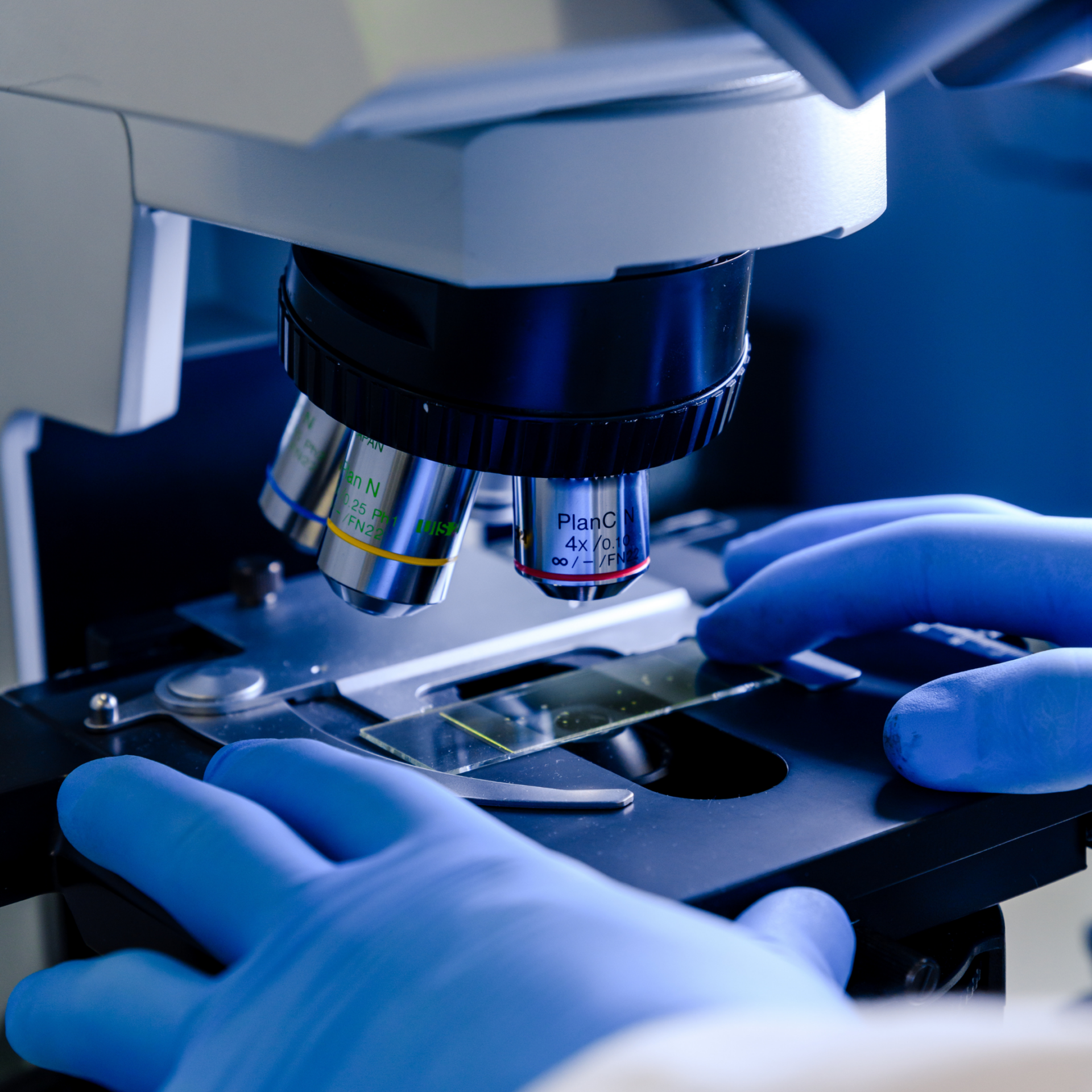
Equipment Manufacturing High-Accuracy Components for Scientific Instruments: What Lab Managers Need to Know
Scientific instruments operate at the edge of detectability, resolving subcellular structures, quantifying trace contaminants at parts-per-billion levels, measuring minute thermal and optical variations. Lab managers evaluating these systems typically focus on resolution, sensitivity, and drift. But the underlying determinant of those performance metrics is the precision of the mechanical components inside the instrument.
Every spectrometer, chromatograph, microscope, and metrology system depends on structural and mechanical parts manufactured to tolerances often measured in single-digit microns. These components govern whether optical paths stay aligned, fluid systems remain stable, and measurement platforms hold calibration over time. Understanding how those parts are made, and what to look for, helps lab managers make better purchasing decisions and avoid costly performance issues downstream.
Mechanical Stability Comes Before Electronics
Instrument performance is frequently associated with detectors, software, and signal processing. But the effectiveness of all three depends entirely on the mechanical stability of the platform underneath them. Take an optical emission spectrometer: consistent measurements require precise alignment between light sources, mirrors, diffraction gratings, and detector arrays. A shift of just 5 µm, roughly one-tenth the thickness of a human hair, can introduce measurable signal variation in high-resolution optical systems.
The mechanical structure must therefore deliver dimensional stability across temperature changes, resistance to vibration, consistent alignment between assemblies, and long-term resistance to wear. These characteristics are not achieved through material selection alone. They are the product of precision machining and disciplined process control.
Why 5-Axis Machining Matters
Traditional 3-axis machining requires multiple setups to access different faces of a component. Each time the part is repositioned, slight alignment errors can accumulate and compromise the geometric relationships between critical features. Five-axis CNC machining addresses this directly by producing complex geometries in a single setup, preserving spatial relationships between bearing bores, optical mounting surfaces, sensor interfaces, and fluid channel connections throughout the cut.
An optical mounting bracket, for instance, may require flatness within 3 µm and perpendicularity within 5 µm. Holding those tolerances is far more reliable when all critical surfaces are machined without removing the part from the fixture. That single-setup integrity directly translates into instruments that maintain proper optical alignment throughout their operational life.
Verifying What Cannot Be Seen
Precision machining means nothing without verification. Coordinate measuring machines use touch probes or optical sensors to measure component geometry in three dimensions, confirming the flatness of mounting surfaces, the concentricity of rotating elements, the true position of locating features, and the parallelism between structural planes. A CMM can verify that a precision bore sits within 4 µm of its intended position relative to a defined datum reference, the kind of confirmation that ensures parts assemble correctly and function as designed. Without that level of metrology, dimensional errors can go undetected until they surface as instrument instability, noise, or calibration drift.
Thermal Effects and Surface Finish
Temperature fluctuations are unavoidable in laboratory environments, and their effect on mechanical dimensions is significant. Aluminum, widely used in instrument housings for its weight and machinability, expands approximately 23 µm per meter per degree Celsius. In a 300 mm structural component, a 2°C temperature swing produces nearly 14 µm of expansion, enough to affect optical alignment or sensor positioning. Precision manufacturers mitigate this by carefully selecting materials, using stress-relieved stock, maintaining controlled machining environments, and adopting cutting strategies that minimize residual internal stress.
Surface finish plays a parallel role. A roughness of Ra 1.6 µm may suffice for general industrial parts, but optical mounts often require Ra 0.4 µm or better to ensure proper seating and alignment. Achieving those finishes demands specialized tooling, controlled cutting parameters, and consistent process management, details that separate a competent shop from a precision-focused operation.
Process Consistency Across Production
Laboratories frequently deploy multiple units of the same instrument across facilities. Reproducible results between units depend on manufacturing process control. Statistical process control tracks dimensional measurements across production runs and flags variation before it produces nonconforming parts. ISO-certified quality management systems provide the structured framework for maintaining that consistency. For lab managers, the practical outcome is reliable instrument-to-instrument performance, predictable calibration intervals, and reduced service intervention.
Questions Worth Asking Your OEM
Lab managers do not need to become machinists, but asking the right questions during instrument evaluation can reveal whether a system is built for sustained performance or simply meets minimum specifications. Key questions include: Are alignment-critical components machined in single setups with proper datum control? Is dimensional verification performed on CMMs with documented first article inspection? How does the design address thermal expansion in optical and high-sensitivity subsystems? What statistical process controls ensure unit-to-unit consistency? How long does calibration typically hold, and what mechanical factors support that stability?
The Invisible Foundation
Most laboratory professionals will never see the internal mechanical components of their instruments. Yet those parts, every mounting surface, bore, and structural interface, determine whether the system delivers consistent performance over years of daily use. Precision manufacturing ensures those microscopic details produce reliable macroscopic results. For lab managers, understanding this connection between upstream machining quality and downstream measurement confidence is one of the most practical tools available when selecting instruments built to last.