
Business Strategy Invest for CNC Excellence
Invest for CNC Excellence: Raising the Standard for World-Class Manufacturing
Originally published in February 2026 by Canadian Metalworking. Republished and adapted with permission.
Featured Insight
In today’s manufacturing landscape, competitiveness is no longer defined solely by owning CNC equipment. It is defined by owning the right equipment and by committing to continuous advancement.
Many shops still rely heavily on 2-axis CNC lathes and 3-axis machining centres as core production assets. While these machines have served the industry well, the reality is clear: they are no longer enough for shops that aspire to operate at a world-class level.
To compete globally, a new standard and a new mindset are required.
The Core Industry Challenge: Comfort vs. Competitiveness
Across vendor open houses, shop capability listings, and even auction notices from closing facilities, a consistent pattern emerges: an overreliance on traditional 2-axis and 3-axis platforms.
The issue is not whether these machines function. The issue is whether they position a shop for long-term competitiveness.
When operations depend on multiple setups, extended cycle times, manual quality processes, and limited automation, margins shrink, and customer expectations become harder to meet.
The difficult but necessary question is:
How can a shop become truly world-class using yesterday’s production model?
The honest answer is — it cannot.
Key Investment Areas for Modern Machine Shops
Achieving excellence requires strategic investment in the following areas:
1. Multi-Axis CNC Lathes and Mills
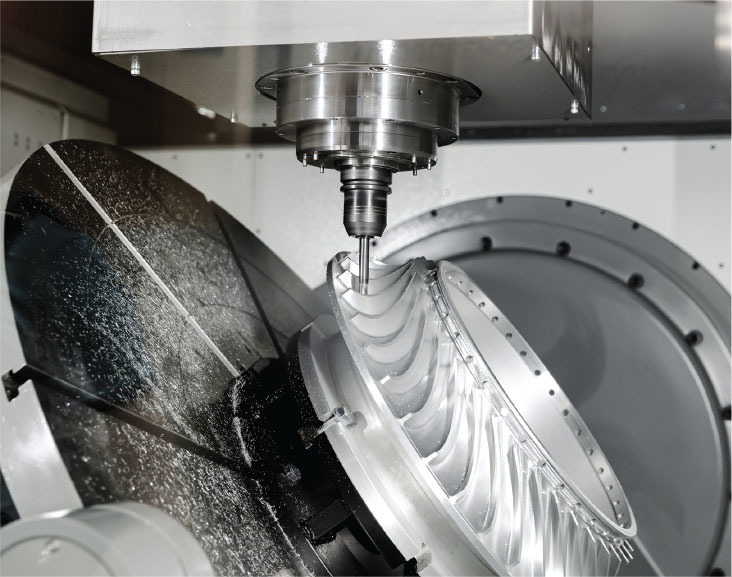
Multi-axis platforms dramatically reduce setups by enabling more complex machining in fewer operations.
Fewer setups mean:
- Higher dimensional accuracy
- Reduced handling errors
- Shorter production times
- Improved consistency
What once required multiple operations across separate machines can now be completed in one streamlined process. This shift alone can redefine productivity and quality standards.
2. Automation Integration
High-end CNC equipment reaches its full potential only when paired with automation.
Robotics, pallet systems, bar feeders, and automated material handling allow shops to run unattended for extended periods. The result:
- Increased spindle uptime
- Greater throughput
- Faster response to customer demand
- Lower per-part costs
When implemented strategically, automation is not an expense; it is a competitive multiplier.
3. CNC Measuring and Scanning
Precision manufacturing demands precision verification.
In-machine probing, high-speed scanning, and modern CMM systems ensure quality is built into the process rather than inspected at the end.
Shops that still rely on manual or outdated measurement tools face:
- Slower throughput
- Inconsistent quality
- Increased risk of defects
- Reputation damage
World-class performance requires measurement systems that keep pace with production.
4. High-Performance Tooling
Advanced machines deserve advanced tooling.
Premium turning and milling tools increase tool life, improve surface finishes, and reduce cycle times. Conversely, low-cost or poorly supported tooling often results in machining errors, scrap, and frustrated customers.
Tooling decisions should be driven by performance and technical expertise, not short-term cost savings.
Modern’s Perspective: Elevating the Competitive Baseline
At Modern Engineering, we see a clear divide in the industry.
Shops that view equipment investment as optional upgrades often struggle to differentiate themselves. Those that treat technology as a strategic growth engine consistently outperform.
The future of machining belongs to operations that:
- Embrace multi-axis efficiency
- Integrate automation intelligently
- Digitize measurement and quality control
- Standardize on performance tooling
World-class status is not achieved accidentally. It is engineered intentionally.
Practical Next Steps for Shops Ready to Evolve
If your goal is long-term competitiveness, start here:
- Evaluate how many setups your current processes require.
- Assess spindle utilization rates and automation opportunities.
- Review your quality control workflow for speed and integration gaps.
- Audit tooling performance and supplier expertise.
- Develop a phased capital investment roadmap aligned with growth goals.
The shops closing today often share one common trait: they stopped evolving.
The shops thriving tomorrow will share another: they never stopped investing.
The World-Class Standard
Modern manufacturing technology exists to elevate performance. But technology alone is not enough; it must be paired with the right mindset.
Becoming world-class requires an ongoing commitment to investing in the most advanced, productive equipment available. It demands strategic thinking, disciplined capital planning, and the willingness to move beyond outdated norms.
Excellence is no longer optional. It is the baseline.