
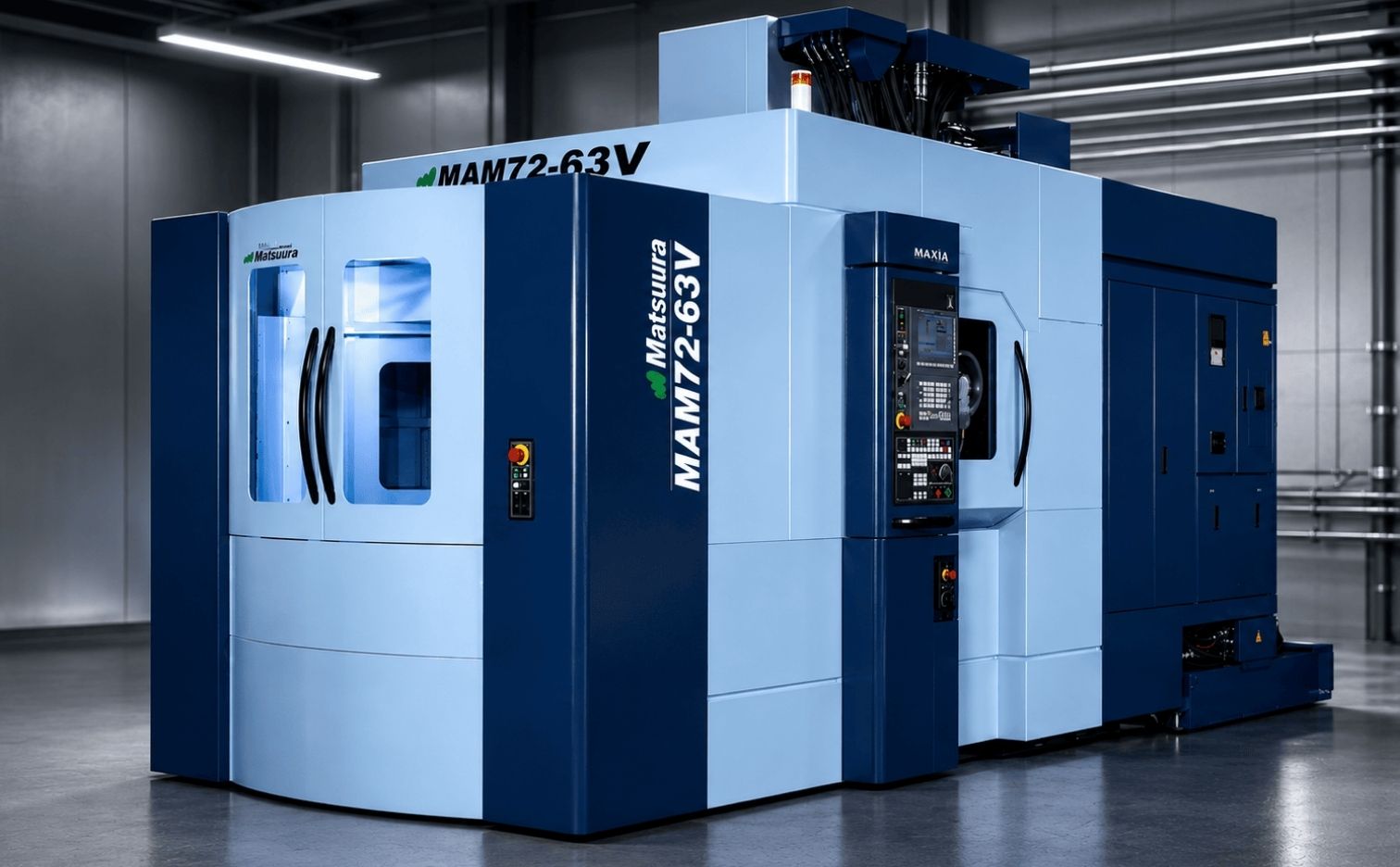
Machine Shop Tips How to Reduce CNC Machining Costs: Minimize Setups Through Multi-Axis Machining
Manufacturers are under constant pressure to reduce production costs without sacrificing quality, precision, or turnaround times. In CNC machining, one of the most effective ways to improve efficiency is by minimizing the number of setups required during production.
Every time a machinist must stop a process to manually reposition a part, the operation becomes more expensive. Additional setups increase labor time, extend production schedules, and introduce greater opportunities for dimensional inconsistencies or alignment errors.
For complex components, especially those requiring machining across multiple surfaces, reducing setup time can significantly improve cost control and production reliability.
At Modern Engineering, advanced multi-axis machining capabilities help manufacturers streamline production while maintaining the precision required for demanding industrial applications.
Why Multiple Setups Increase CNC Machining Costs
Traditional machining methods often require operators to remove and reposition a part several times throughout the manufacturing process. Each setup demands additional labor, inspection, recalibration, and machine downtime.
As setups increase, so do:
- Labor costs
- Production lead times
- Machine idle time
- Risk of human error
- Dimensional variation between operations
Even minor repositioning inconsistencies can create alignment issues that affect the final performance of a component. In industries where tight tolerances are critical, those small deviations can become costly problems.
Reducing setups helps manufacturers improve workflow efficiency while maintaining greater consistency throughout the machining process.
The Advantage of Multi-Axis CNC Machining
Modern 3-axis, 4-axis, and 5-axis CNC machines allow manufacturers to machine multiple faces of a component during a single setup. Instead of manually repositioning the workpiece after each operation, the machine can rotate or reposition the part automatically with extreme precision.
This capability provides several operational advantages:
- Fewer manual interventions
- Faster machining cycles
- Improved dimensional accuracy
- Better repeatability across production runs
- Reduced labor requirements
By consolidating multiple operations into one setup, manufacturers can significantly reduce non-productive time while increasing machining efficiency.
For high-volume production environments, these time savings can scale quickly across entire manufacturing programs.
Complex Components Benefit the Most
Multi-axis machining becomes especially valuable when producing intricate or geometrically complex parts. Industries such as automotive, marine, transportation, hydraulics, electronics, and medical manufacturing often require components with features located on multiple planes or difficult-to-reach surfaces.
Producing these parts using conventional machining methods may require numerous setups and extensive operator involvement.
Multi-axis CNC equipment simplifies these processes by allowing the machine to approach the part from different angles within a single operation. This improves both machining precision and production speed while reducing the risk of cumulative alignment errors.
For manufacturers working with high-performance mechanical systems, consistency across every dimension matters.
Improved Accuracy Reduces Waste and Rework
One overlooked benefit of setup reduction is improved part accuracy. Every manual reposition introduces the possibility of slight misalignment, even with careful inspection procedures.
Multi-axis machining minimizes these transitions, helping maintain tighter tolerances throughout the production cycle.
Greater accuracy leads to:
- Fewer rejected parts
- Reduced rework costs
- Better assembly fitment
- Improved long-term component performance
Over time, reducing scrap and rework contributes directly to lower manufacturing costs and more predictable production schedules.
Faster Production Without Sacrificing Quality
Reducing setups is not simply about speeding up machining operations. It is about improving overall manufacturing efficiency while maintaining high-quality standards.
Advanced multi-axis machining allows manufacturers to:
- Shorten production timelines
- Increase throughput capacity
- Improve repeatability
- Support tighter tolerances
- Deliver complex parts more efficiently
As industries continue demanding faster turnaround times and more sophisticated components, multi-axis machining has become an essential part of cost-effective CNC manufacturing.
Efficiency and Precision Must Work Together
Reducing CNC machining costs should never come at the expense of quality or reliability. The most effective manufacturing strategies improve efficiency while preserving the precision necessary for critical applications.
By minimizing setups through advanced multi-axis machining, manufacturers can reduce labor costs, improve consistency, and optimize production for complex mechanical components.
In industries where precision, repeatability, and operational efficiency are essential, reducing setup time becomes a competitive advantage.