
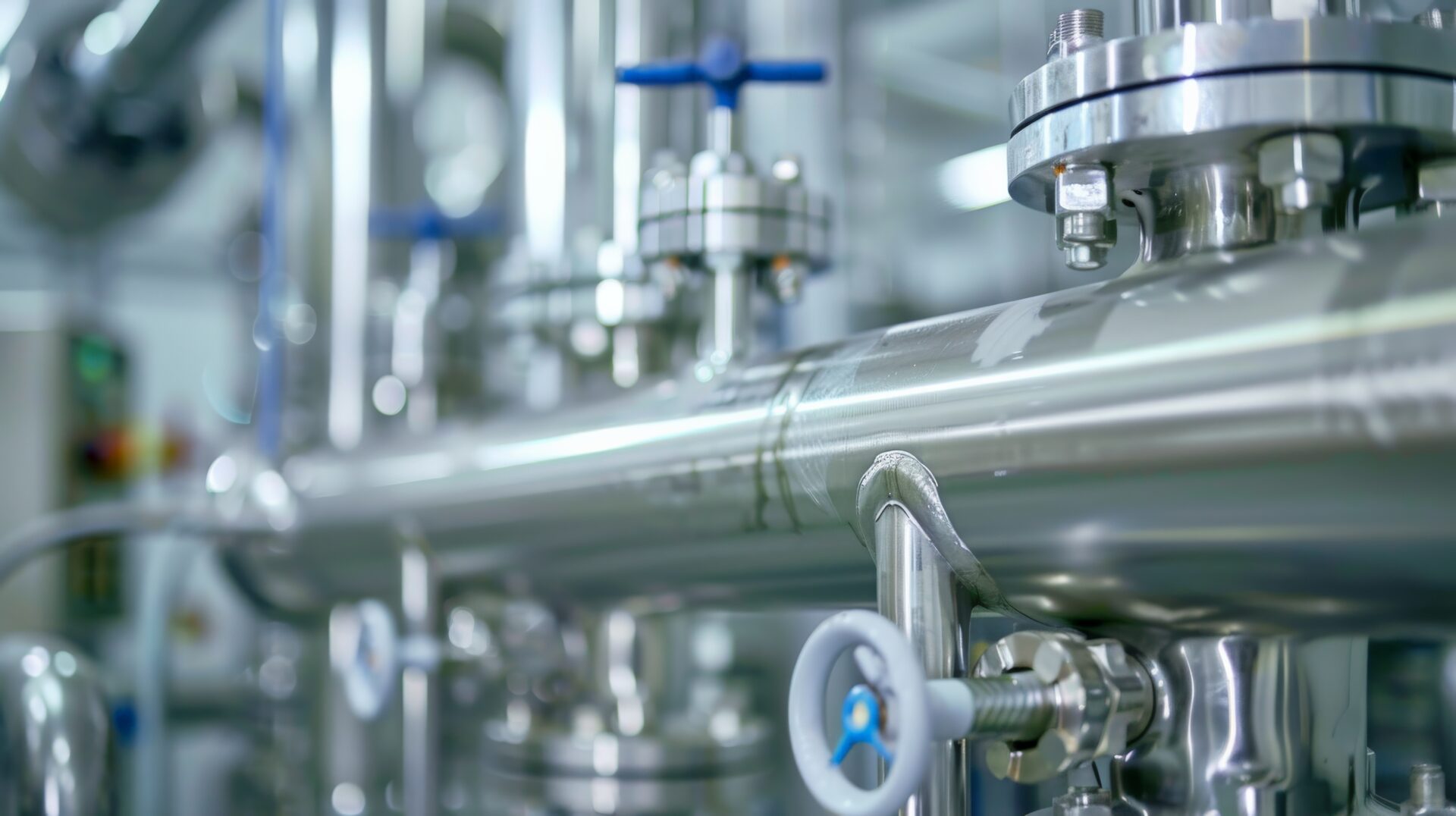
Modern Engineering News Why Hydraulic Performance Lives or Dies at the Machining Level
Hydraulic systems are built to move force with control. Whether they are used in industrial equipment, transportation systems, marine applications, manufacturing machinery, or heavy-duty mechanical assemblies, their performance depends on one thing above all else: precision.
A hydraulic system may be designed around pumps, cylinders, valves, manifolds, seals, and fittings, but its reliability is often determined much earlier, at the machining level. If a component is slightly out of tolerance, poorly finished, misaligned, or inconsistent from part to part, the entire system can suffer.
At Modern Engineering, precision CNC machining supports components where dimensional accuracy, repeatability, and quality control directly affect real-world performance.
Hydraulic Systems Leave Little Room for Error
Hydraulic systems operate under pressure. That pressure makes small manufacturing inconsistencies much more serious than they might be in lower-stress applications.
A small dimensional variation can affect:
- – Fluid flow
- – Internal leakage
- – Seal performance
- – Pressure stability
- – Component wear
- – Heat generation
- – Overall system efficiency
In many hydraulic assemblies, parts must fit together with extremely controlled clearances. If those clearances are too loose, fluid can bypass critical sealing surfaces. If they are too tight, parts may bind, wear prematurely, or fail under operating load. Precision machining helps control those clearances from the start.
Tight Tolerances Protect Pressure and Flow
Hydraulic performance depends on controlled movement of fluid through precisely machined passages, bores, ports, and sealing surfaces. When these features are not manufactured accurately, the system may lose efficiency before it ever reaches full operating performance.
For example, a valve body with inconsistent internal geometry may create uneven flow. A cylinder component with poor concentricity may cause seal wear. A manifold with misaligned ports may introduce pressure drops, leakage points, or assembly complications.
Tight-tolerance machining helps ensure that each feature performs as designed. This is especially important when hydraulic components are part of larger assemblies where multiple parts must align and function together under pressure.
Surface Finish Affects Sealing, Wear, and Efficiency
Dimensional accuracy is only part of the equation. Surface finish also plays a major role in hydraulic reliability.
Hydraulic components often rely on seals, O-rings, precision fits, and sliding contact surfaces. If a machined surface is too rough, it can damage seals or create premature wear. If it is too smooth in the wrong application, it may not retain lubrication properly. If the surface finish varies across a production run, performance may vary, as well.
Proper machining processes help produce surfaces that support:
- – Reliable sealing
- – Reduced friction
- – Longer component life
- – Lower risk of fluid leakage
- – More predictable operating performance
For hydraulic systems, the quality of the machined surface can be just as important as the final dimension.
Alignment Problems Become System Problems
Hydraulic assemblies depend on alignment. Shafts, bores, ports, mounting faces, and mating surfaces must work together without forcing components out of position.
Even minor misalignment can create serious downstream issues, including uneven loading, seal distortion, vibration, leakage, or accelerated wear. In high-pressure systems, those problems can quickly lead to maintenance downtime or component replacement.
Advanced CNC machining helps reduce these risks by maintaining positional accuracy across complex parts. Multi-axis machining can also reduce the number of setups required, which helps minimize the cumulative error that can occur when a part is repeatedly repositioned.
The fewer opportunities there are for alignment variation, the better the final component performs.
Repeatability Matters Across Production Runs
One accurate component is not enough. Hydraulic manufacturers often need consistency across prototypes, replacement parts, and production runs.
Repeatability is especially important when components must be interchangeable. A part produced today should perform the same way as the part produced next month or next year. That requires controlled machining processes, stable workholding, accurate programming, and inspection procedures that verify critical features.
Repeatable machining supports:
- – Easier assembly
- – Fewer rejected parts
- – More consistent hydraulic performance
- – Lower maintenance risk
- – Better long-term supply reliability
For OEMs and industrial manufacturers, repeatability is what turns precision into production confidence.
Inspection Turns Precision into Proof
In hydraulic applications, quality control cannot be treated as a final formality. Inspection is what confirms that critical tolerances, geometries, and surface requirements have been achieved.
Modern inspection equipment, including coordinate measuring machines and precision scanning tools, helps verify complex dimensions before components move into assembly or service. This gives manufacturers greater confidence that parts will perform as intended under pressure.
Inspection also helps identify process drift before it becomes a production problem. For hydraulic components, that level of control can prevent costly failures, rework, and downtime.
Machining Is a Performance Decision
Hydraulic performance is not created only by system design. It is protected through precise manufacturing.
The right machining partner understands that every bore, port, thread, face, groove, and sealing surface contributes to how the final system performs. When machining is accurate, repeatable, and properly inspected, hydraulic components are better positioned to maintain pressure, control flow, reduce wear, and support long-term reliability.
For industries where hydraulic systems must work under demanding conditions, precision machining is not simply a production step. It is a performance requirement.